Asia News Today
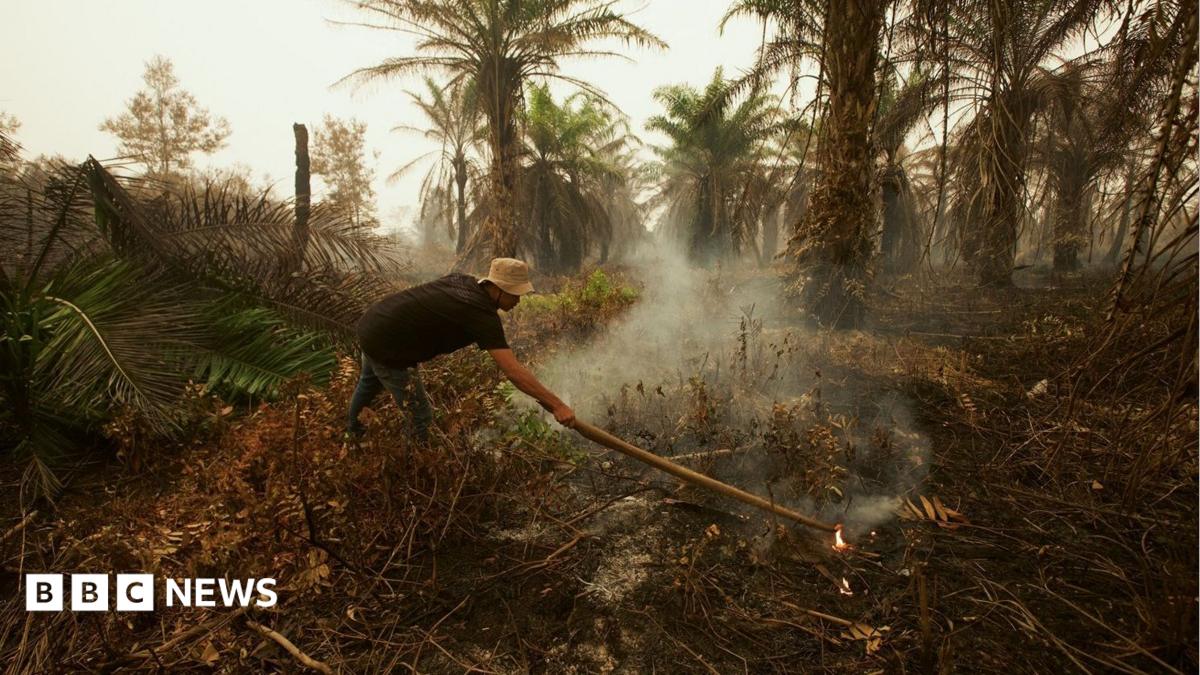
Delayed rains prolong Kalimantan haze published at 03:27 BST Liza Tambunan Reporting from Palangka Raya, Central Kalimantan Image caption, The continuous burning of peatland causes toxic haze to billow from the ground In the car, our driver Yusron tells me he hasn’t encountered prolonged haze like this before. The 57-year-old Banjarmasin resident recalled devastating fires in 1997 and 2015, noting it was the monsoon rains that finally extinguished the flames back then. "We’re just waiting for the rainy season to put an end to this, but this year it seems to have been delayed," Yusron said.
Relief may be delayed, as Indonesia’s weather agency reported a shorter rainy season starting in November, a month later than forecast. Back on the road, the haze worsens as we approach Palangka Raya, thickening and glowing with a light yellow tint. Visibility is limited, forcing Yusron to slow down.
The toxic smog shrouded the sunlight so heavily that it got dark early. By the time we arrived in Palangka Raya around 18:00, it was already pitch black. Some schools in Malaysia extend closures published at 03:02 BST Image source, Getty Images Schools in Malaysia's southernmost state of Johor will remain closed for a second week, authorities say, noting that pollutant index readings remain at "concerning levels".
Cases of asthma and respiratory tract infections have gone up by 20% over the past week, the state's education committee chairman Muhammad Naqib Md Ghazali said on Sunday. Meanwhile, students in the capital city of Kuala Lumpur and five other Malaysian states headed back to classrooms on Monday after a week of school closures. The haze has a price tag.
And it's getting bigger published at 02:45 BST Osmond Chia Business reporter Image source, Getty Images The economic cost of this year's smog will exceed that of the 2015 crisis, which caused the region roughly $20bn (£15bn) in losses, Nanyang Technological University (NTU) professor Euston Quah tells the BBC. That episode was one of the worse haze crises in the region, estimated to have cost Singapore alone more than S$1.8bn ($1.4bn; £1.05bn) in nationwide economic losses, according to NTU. South East Asia's economy and population have grown since then, making the impact to productivity and medical bills from the toxic smog more severe, says Quah, who has studied the impact of haze for almost two decades.
The total cost to the region remains unclear and will depend on when the haze ends, he adds. Smouldering peatlands line road to Central Kalimantan published at 02:32 BST Liza Tambunan Reporting from Banjarmasin, South Kalimantan Image caption, Burning peatlands can be seen across Central Kalimantan We flew into South Kalimantan because the thick haze is causing major flight disruptions in Central Kalimantan. So we’re taking the popular alternative: fly into Banjarmasin and drive five hours to Palangkaraya.
Along the road, I was surprised to see many people walking around without masks, left with no choice but to breathe the polluted air. It didn’t take long to find burned areas. Less than 30 minutes from the airport, I saw several hotspots: smouldering peatland with smoke billowing from the ground despite no visible flames.
Many fires occur on peat, which refers to carbon-rich soil that becomes dangerously flammable when drained and dry. Some blame deforestation and peat degradation for the fires. Others accuse large-scale plantation owners of illegally clearing land by burning.
Meanwhile, scientists say the ongoing super El Niño is exacerbating dry conditions, fueling Indonesia’s worst fires in over a decade and sending toxic haze as far as Singapore and Malaysia. Arriving in a blanket of toxic smog published at 02:30 BST Liza Tambunan Reporting from South Kalimantan Image caption, Heavy toxic haze blankets a road connecting South and Central Kalimantan I flew out of Jakarta just as haze began drifting in from Kalimantan, the very region I was heading toward. As our plane approached Syamsudin Noor Airport in South Kalimantan, the view below was partially obscured by haze.
The landing was rough - though I wasn’t sure if that was due to poor visibility, the haze itself, or something else entirely. Stepping outside, my sense of smell was immediately hit by an acrid odor unlike anything I’ve smelled before - a pungent mix of burned rubber, charred earth, and wood. Though it was only 10 in the morning, the sky was gloomy and the morning sun hidden.
The longer I stood outside, the drier my eyes became from the toxic smog lingering in the air. Checking an air quality site on my phone, Banjarmasin was recording hazardous levels at 569. Anything over 100 is considered unhealthy.
I quickly took shelter inside the car taking us to Palangka Raya in Central Kalimantan, one of the worst-affected areas where fires have been ravaging for months. The BBC is at the epicentre of South East Asia's haze crisis published at 02:30 BST It's another hazy morning in large swathes of South East Asia, where tens of millions of people have now been living with unhealthy air for weeks. The haze - which has blanketed parts of Indonesia, Malaysia, Singapore and the Philippines - comes from smouldering peatlands in Central Kalimantan, on the Indonesian side of Borneo island.
Tens of thousands in Indonesia alone have fallen ill because of the haze, which also cast a literal dark cloud over recent F1 races in Malaysia and Singapore. Pressure is intensifying on Indonesia to tackle the wildfires that cause the haze, which is shaping up to be the worst in recent years. The BBC is on the ground in Central Kalimantan and we will bring you updates from epicentre of the region's haze crisis.
We will also be bringing you reports from our journalists across South East Asia.
Source: BBC